
A Luminous Halo

"Life is not a series of gig lamps symmetrically arranged; life is a luminous halo, a semi-transparent envelope surrounding us from the beginning of consciousness to the end." --Virginia Woolf

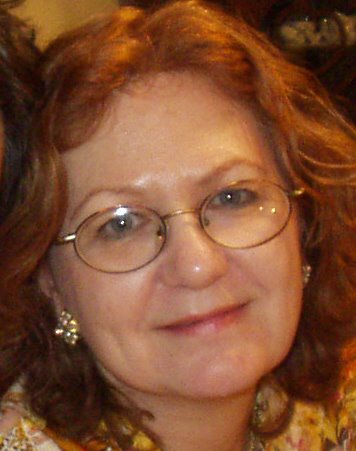
My Photo
Name:
Location: Springfield, Massachusetts, United States

Smith ’69, Purdue ’75. Anarchist; agnostic. Writer. Steward of the Pascal Emory house, an 1871 Second-Empire Victorian; of Sylvie, a 1974 Mercedes-Benz 450SL; and of Taz, a purebred Cockador who sets the standard for her breed. Happy enough for the present in Massachusetts, but always looking East.

Wednesday, April 23, 2014

Maggie Rose Redux

In 1960, I kept a diary. I was 12 years old. In 2011, I posted in this blog each day the text of my diary entry for that same day in 1960. Many things I remembered, but a surprising number of entries seemed to have been written by another person. In many instances I had no recollection whatsoever of the events described, and I was taken aback by some of my reactions. Overall I had the feeling, copying out those old entries, that a messy, disorganized, slightly mercenary preteen had usurped the place of the saintly little Cicily of my memories. The diary Cicily had terrible taste in movies, didn't always finish her homework, and was occasionally mean to her friends. Part of me wanted to burn the evidence, but being a journalist and a historian, I opted to publish it here.

On April 9, 1960 I wrote:
 "At Steiger's there was a fountain, so we threw in pennies (my pennies). I finished 'Maggie Rose,' it was wonderful."
I have no recollection of having read Maggie Rose. But I was curious about what my younger self--the self I am realizing I don't actually know all that well--would have considered "wonderful." The Springfield library system no longer owns a copy of the book, but the Berkshire Athaneum does, and through the miracle of the inter-library loan, that copy arrived at my local branch a few days ago and I was able to re-read it.

Maggie Rose is written by Newbury medalist Ruth Sawyer, a storyteller, teacher, reporter and author who lived in Boston. (Sawyer's son-in-law was Robert McCloskey, author of Make Way for Ducklings.) It's illustrated by none other than Maurice Sendak. The story takes place in 1951. Maggie Rose is an enterprising little girl, the rest of whose family is cheerfully indolent. On June 24 she realizes her birthday, which falls on Christmas Eve, is exactly half a year away. She makes plans to have, for the first time, a real birthday/Christmas celebration (her family is too lazy and too poor ever to have gone to that much effort). For six months she works to earn money and make preparations. The story ends on December 24 with her party, a smashing success.

Maggie Rose actually is a pretty good book. I think what I like about it--and what my twelve-year-old self probably liked--is the sense of place evoked in the story. Maggie Rose lives in a small Maine seacoast town. She spends a lot of time outdoors in her "secret place" on the fringe of the woods. Flora and fauna are lovingly described by Sawyer...hemlocks and pine, spruce and birch, mosses, rocks, sparrows. The other nice thing about the book is Maggie Rose herself. She's a reader, a dreamer, and a resourceful child. Kind of like me as a girl. Or at least what I think I was like.

Labels: , , , , ,

Sunday, February 09, 2014

Amy Lowell

Biography is not my favorite genre, but nevertheless two particular biographies have endeared themselves to me. One is a two-volume work by Eve Curie about her mother, Marie, and the other is S. Foster Damon's 1935 Amy Lowell. I read these in junior high school for book reports. The former is two thick volumes, translated from the French, and the latter a hefty 773 pages. Spend that much time learning about someone's life and you are bound to come away with an appreciation.

The books were not my own; they were checked out of the Forest Park branch of the public library. That branch was right across the street from my junior high school, and probably the place I spent the most time in my childhood, after home and school. At least until I went to high school--at that point it was probably home, school, and the downtown branch of the library. That main branch was across the street from my high school.

 One of the perks of my current location is its proximity to the downtown branch of that same library. If anyone had told me in the 1950s or 1960s that I would go away to college, live on three different continents, and end up two blocks from my old high school and library, I would have had difficulty believing it. But that's what happened. And anyone who knows this blog knows my appreciation for the free shelf in that downtown library.

So imagine my pleasure a while back at finding a copy of Amy Lowell's biography on said free shelf. My pleasure turned to amazement when I realized it was the self-same copy I had checked out probably in 1961, discarded by the Forest Park branch. Now it's a treasured addition to my own library. As the King of France says to King Lear, "Be it lawful I take up what's cast away."

Today is the 140th birthday of Amy Lowell, Massachusetts socialite and poetess, critic and translator, friend and rival of Ezra Pound, cigar-smoking antifeminist beloved of current feminists. She was born in Brookline, buried in Cambridge. I think I'll celebrate her birthday tonight by re-reading her biography.

Labels: , , , ,

Thursday, January 02, 2014

Lakeville Lady

I confess, I have all the attributes of a literary snob. A Master's degree and most of the work towards a doctorate in English literature. A career as a college professor, as a cataloger of antiquarian books, and as a writer of academic and literary publications, whose specialty is putting medical, legal, or otherwise technical material into a format most people can understand. No television set. Zero interest in sports, lotteries, casinos, malls, fast food restaurants, or most other aspects of popular culture. But when I relax in my wing chair with a pot of tea and a book, it's virtually never an enriching work of non-fiction or a Pulitzer Prize-winning novel that I'm reading. My guilty secret is that I'm addicted to tacky genre romance novels.

And not just any tacky romance novels. Specifically, the really, really bad ones. The worse, the better. I'm talking about books in which the heroine's name changes from Julia to Jasmine in Chapter 3, or the writer forgets how many children Julia/Jasmine's sister has, or grammar and spelling errors abound. Books that contain thrilling exchanges of dialog like:
       "Is there no way we can be on our own this evening?" he asked huskily.
       "It's impossible," she whispered. "It's our new diet conscious evening."

 I've never actually bought one of these, even at a tag sale where they can be had for a nickel. I check them out of the library--or, more likely, pick them up off the free shelf there. As a matter of fact, it's been a while since I've actually gotten any further into the library than the free shelf, the pickings there are so interesting. I go back to dump off ten that I've read, and return home with eighteen. It's sort of a disease with me.

One series particularly dear to my heart is British: the Linford Romance Library. For some reason I can't fathom, these are published by the Ulverscroft Foundation, a registered charity in the U.K, "established in 1974 to provide funds to help towards research, diagnosis and treatment of eye diseases." Among other charitable contributions, they endow the Frederick Thorpe Ulverscroft Chair of Ophthalmology at the University of Leicester. How they got into the crappy-romance-novel business is unclear.

 Lakeville Lady is a sterling example of the genre. Matilda Main has an engagement ring foisted on her by her current rich, older boyfriend, Jay Thorndike, who doesn't even bother to propose. Then he leaves town. Matilda decides to assert her independence by buying her own house, which she accomplishes (from checking the want ads, to purchase and sale agreement, to move-in) for $500 down in the space of an afternoon. She acquires a handyman named Rock, who can build a porch, chop a cord of wood and haul all the boulders for a retaining wall in the time it takes the womenfolk to make a casserole. They fall in love. Matilda learns that Jay is a swindler who is actually married to a woman named Thelma. Jay returns, Thelma appears and tries to shoot Matilda, Rock saves her life, the cops show up, Matilda and Rock confess their love for each other, the end.

The best line in the book, however, is on the half title page, penned by an earlier reader. "The worse written story I have ever read."

Labels: , ,

Saturday, March 24, 2012

GGGG


Today was the third annual Author Fair at the Springfield Central Library. I LOVE walking a block or two to a nice event that doesn't cost anything....it's one of the perks of living downtown. (I've only filled my gas tank once since September!) So over I went.

The beautiful library rotunda was filled with tables, behind which sat local authors with copies of their books, their business cards, and whatever other items they wanted to display. Randy Purinton had articles and research materials pertinent to his Civil-War-era non-fiction book, It Hasteth Away, Husein Muhammad had rocks painted to look like the ones in his children's book The Man, Blanche Jackson-Hill had lollipops and Monopoly money for Straight to the Point Financing, Gerry Garner had beautiful bonsai.

Ms. Garner--GGGG, she calls herself, for Great-Grandmother Gerry Garner--was so vivacious and interesting, I talked to her for over half an hour. Her book, Generations Build the Future: Positives Needed Now! is a collection of life lessons from people across the age spectrum. (I feel I'm not doing the book justice by my description, but I've yet to read it!)

Gerry Garner recently started a group for authors, and I intend to join it. I'm hoping some of her energy will rub off on me. She's trim, petite, old enough to be a great-grandmother, but incredibly vigorous. She really packs a lot in a small package. Come to think of it, kind of like her bonsai.

Labels: , , , , ,

Wednesday, March 21, 2012

Uncle Tom's Cabin Turns 160

Harriet Beecher Stowe Center Yesterday marked the 160th anniversary of the publication of Uncle Tom's Cabin, the best-selling book (in the world!) in the 19th century. Although Harriet Beecher Stowe composed most of the novel while living in Brunswick, Maine, she spent the last 23 years of her life in Hartford, Connecticut, in an interesting community called Nook Farm, which today houses a vibrant Center dedicated to her life and work. Hartford's Stowe Center commemorated this 160th anniversary with a twenty-four-hour reading of Uncle Tom's Cabin, and I was a participant.

A group reading of this sort takes you straight back to junior high. Remember the whole class having to read aloud from a textbook by turns? Your stomach twisting with dread as you page ahead in the text, trying to estimate where your turn will fall? Will you get a word you can't pronounce? An embarassing word like "breast?" A passage where you have to sing? Will you lose your place, miss your cue, stutter, sniffle, burp?

Uncle Tom's Cabin contains a lot of dialect, Southern dialect at that. While I waited for my turn, I listened to a poor woman struggling through this: "Dat ar was conscience, Andy; when I thought of gwine arter Lizy, I railly spected Mas'r was sot dat way. When I found Missis was sot the contrar, dat ar was conscience more yet,—cause fellers allers gets more by stickin' to Missis' side,—so yer see I 's persistent either way, and sticks up to conscience, and holds on to principles."

The reader directly before me read in Swedish, foiling my attempts to predict where I would end up. I tried in vain to follow along in my English-language version. Years of confident lecturing in front of university classrooms evaporated and I was right back in junior high. It didn't help that cameras were rolling.

I was fortunate. I got the beginning of Chapter IX, in which Senator Bird and his wife discuss the morality of the Fugitive Slave Law which is being debated in the legislature. Mary Bird is gentle, sympathetic, and valiant, and Stowe puts her own Christian and abolitionist views into the good woman's dialogue. (That's "dialogue," not "dialect!") The trickiest word I got was "forte," which I happen to know has only one syllable. Before I knew it, I was saved by the bell.

Afterwards, I was cocky enough to agree to share my impressions of the experience in front of yet another camera. Who knows where that footage will end up? But anyway. It was the least I could do for Harriet. If you haven't read her book at all, or lately, you really should. Sentimental, yes. Stereotyped? Maybe--although it could be argued that she simply created individual characters so memorable that they then became stereotypes. In any case, legend has it that Abraham Lincoln called her "the little woman who wrote the book that started [the Civil] war." Not bad for a housewife and mother of seven kids, frustrated because women weren't allowed to become preachers, scribbling her thoughts instead on the back of brown paper bags.

Labels: , , ,

Monday, February 27, 2012

Memento Mori

Snapshots by Cathy Sosnowsky

The worst night of my life took place when I was 11 years old. The doorbell woke me, and as I lay in my bed in the dark, I heard the deep voice of a man, followed by the screams of my mother. An officer was reporting to her the deaths of her sister and brother-in-law in a horrific auto accident. Their two children, my beloved cousins, were in critical condition, in separate hospitals as a result of the triage of the numerous victims. That was in 1961. Over 50 years later, the fallout from that accident still affects my family.

My aunt Cora was already a grandmother when this accident occured. She had eight brothers and sisters living. But my grandmother--her mother--never got over the loss of this child. Babu, as we called my grandmother, was a Polish immigrant who didn't speak English or work outside the home. One of her newly-arrived cousins, according to old country tradition, got permission from the funeral director to view the closed caskets before the wake and snapped some memento mori images of the horribly disfigured corpses. These he gave to my grandmother. Where she hid them, nobody ever figured out, but frequently she would be found in her bedroom, weeping uncontrollably, and we knew she had been looking at the pictures. Other than cursing that Polish relative, for over forty years no one ever spoke of the accident or of my aunt and uncle.

These days we know a bit better. There's no virtue in that rigid silence. My poor cousins were deprived, not only of their parents, but of the many happy memories of them we might all have shared, and of the healing and consolation which speaking about them and that horrible night would have brought. For most of her life, my girl cousin blamed herself for the accident, because she had wanted to go on the excursion which turned out to be fatal. Decades passed before she learned from older family members that her parents had planned the trip before she even mentioned it. Nobody even knew the guilt she carried in her heart, because everyone was too busy "sparing" her the difficult memories.

British Columbian college professor Cathy Sosnowsky has lost, not one adult child out of nine, but all four of her children. One, before birth, to abortion. One, a gregarious and well-adjusted teen, to accident. Two troubled adopted children to the streets. (The latter are alive, but estranged, and one is in prison.) She coped the only way she knew how, by writing about it, all of it. First poems, then this book called Snapshots: A Story of Love, Loss, and Life.

The title is a literal one. Sosnowsky has assembled over 50 family snapshots, and she organizes the book around them, talking about each one in turn. The pictures start before the children are born and continue after they're gone. The story zigzags from Canada to Europe and back, to pretty much all over the world as the author seeks the "geographic cure." Although we're treated to intimate details of the kids' lives, it's not just a story about them, but about an entire family with very complicated dynamics.

Writing probably saved this woman's life...or at least her sanity. And her book is useful to us, perhaps, too. The stories of others help us to piece together our own stories. Written stories are especially useful because writing allows the opportunity for reflection and organization which speech does not. Everyone has experienced some loss, whether of life or health or love or ambitions.

Sosnowsky currently conducts writing workshops internationally, focused on grief and healing. Her personal website is http://cathysosnowsky.com/ What I admire most about this woman is her courage in putting on paper, for the whole world to see, not just the sweet and sentimental stuff, but the gritty stuff, too. Her mistakes; her shortcomings: it's all in there. If you want to heal yourself, that's what you have to do: come clean. Writing's a bitch. If you don't believe me, try it yourself.

Labels: , , , ,

Thursday, February 21, 2008

Edward Wilson, Naturalist

I don't like biographies. That said, I'm hugely enjoying Naturalist, the memoirs of Edward O. Wilson. Maybe because it's more of an interior autobiography, reflections on the nature of memory and association, on his narrow specialty of Daceton armigerum and the larger universe of evolutionary biology. He writes gracefully, moving easily from the very specific scientific observation to the wider truth, like another of my favorite writers, Lewis Thomas, also a scientist.

Here's a nice quote from the book, pages 50-51 in my edition:

"The human mind moving in a sea of detail is compelled like a questing animal to orient by a relatively few decisive configurations. There is an optimum number of such signals. Too few, and the person becomes obsessive-compulsive; too many, and he turns schizophrenic. Configurations with the greatest emotional impact are stored first and persist longer. Those that give the greatest pleasure are sought on later occasions. The process is strongest in children, and to some extent it programs the trajectory of their lives. Eventually they will weave the decisive images into a narrative by which they explain to themselves and others the meaning of what has happened to them. As the Talmud says, we see things not as they are, but as we are."

Labels: , ,

Thursday, December 06, 2007

To Deck or Not to Deck

Downtown Book Ladies met last night. I guess we spent fifteen minutes helping ourselves to wine and food, five minutes discussing the book, half an hour gossiping, and the rest of the evening discussing various aches and pains. The weather's a bitch and it feels good to grumble.

It was so unseasonably warm for so long this fall that it doesn't feel like the holiday season's upon us. I stay out of stores as much as possible, don't read the paper, watch TV, or listen to the radio, so I'm pretty much out of the loop anyway. Walking into Carol's cozy condo in the McIntosh building, I was surprised to see it fully decked out for Christmas. And boy, did it look adorable. When you've got a manageable space, good taste, and no pets, there's a lot you can do.

My usual modus operandi is to decorate on Christmas Eve, or very close to it, and leave everything in place till Epiphany. I'm flat out with work right now, not to mention flat broke, and Silvie's not going on any unnecessary errands until she gets her studded snow tires put on. But this little snow village gave me an irresistible desire to buy a ten-foot-tall live tree, get out my fifteen or so boxes of garlands and lights and ornaments, and deck my own halls.

Labels: ,

Sunday, December 02, 2007

150th Birthday Celebration

I've been a member of more organizations than I could ever remember or count. One thing I've learned is that if an event--any event--is to be a success, it had better involve food. Free food. Also, especially in colder weather, hot coffee. The more and better the free food, the more successful the event. The more and better the advertising of the free food, the better the attendance. This works for everything from regularly scheduled "working" meetings of clubs to the middle school science fair. If you want enough board members for a quorum, provide sandwiches and coffee. If you want your friends to help you move, lure them with pizza and beer. If you want people to take stop by your booth at the expo, scatter candy bars among the brochures.

Today we celebrated the 150th anniversary of the Springfield Library. At the last meeting of the Library Advisory Board, of which I'm a member, we discussed preparations for the event. Darleen, who runs the Loaves and Fishes meal program at Christ Church Cathedral, thinks like me. She was sure MCDI students would provide a cake at no charge. She'd also pick up the cookies that the library had agreed to pay for. When objections were raised about the possible messiness of coffee, we both agreed to man the table of refreshments and monitor spills.

I could have been working on the set of "The Lonely Maiden," the new Christopher Walken movie filming in Boston, but I take my coffee duties seriously. Others coordinated the tour of the library, the music, and the book fair. Darleen profferred cookies while I cut cake and wiped up splatters.

Many, though by no means all, of those who stopped into the library were regular guests of the Loaves and Fishes next door. It was a chilly day, and our library is no different from any other library in the country, in that it has become a refuge for people with no place else to go. Nearly everyone who walked through the door gravitated immediately to our table with pleased surprise.

In certain company, when a cake is served, the guests all cry out for "just a tiny slice. No, thinner...no, thinner than that!" Then they scrape off the sugary icing. Not here. The fat corner pieces with roses piped on top flew off the table. Coffee was fixed with plenty of cream and as many as eight spoons of sugar. The extra cookies Darleen folded into napkins "for the road" were gratefully accepted.

Three young girls from the Community Music School played Vivaldi and Pachelbel. A couple of ladies from the book club reviewed novels they'd recently read. Ed Lonergan discussed the history and architecture of the building. In a world gone nuts, a little island of civilization, fueled by cookies, coffee and cake.

Labels: , , ,

Monday, April 16, 2007

Tutte le Opere di Nicolo Machiavelli

Recently I've been cataloging some very valuable books, unusual ones for me in that they are not Judaica. Every once in a while the bookseller I work for, Dan Wyman, will acquire an interesting lot which falls outside his specialty. One time it was gay and lesbian comics from the '60s. Another time it was material related to the water industry in New York state (sounds boring, I know, but would you believe a post-war propagandist romance, in which the heroine's fiancé tries to sabotage a dam in upstate New York, nearly taking her life in the process, but she--and the dam--are narrowly saved by a brave civil engineer, with whom she falls in love and lives happily ever after?)

This week it's a miscellany of rather old, very collectible books. Lots of vellum, rag paper, raised bands on the spine, all edges gold, and so on. This particular volume is the complete works of Machiavelli, with no publisher's name or location, but a date at the bottom: MDL. (For those whose knowledge of Roman numerals is rusty, that's 1550.)

Or is it? In fact, this book was probably printed by Pierre Aubert in Geneva around 1640 or 1645. Aubert was responsible for several editions around that time, and used the same imprint--1550--as an earlier edition. And left off any mention of his publishing house or its location.

So how on earth are you supposed to know this? Experience. Famous works like this one have entire volumes devoted to research on the various printings and the provenance of extant copies. Pagination errors, blank leaves, and variations in signatures (letters, numbers, or symbols at the bottom of the first page on each sheet of printed pages of a book as a guide to the proper sequence of the sheets in binding) are used to distinguish otherwise identical editions.

My kids find my predilection for cataloging hilarious. To them, it's an activity of mind-numbing drudgery. I prefer to think of it as detective work, without emphasis on the sordid side of human nature. Detective work I can do in my bathrobe, if I so choose.

This edition of Machiavelli will probably fetch $2000 to $4000. It's centuries old, and has probably been to more--and to more interesting--places than I have. What I do know about this object is tantalizing, and not a drop in the bucket of the whole history with which it is embued.

Labels: , ,

Thursday, April 12, 2007

R.I.P. Kurt Vonnegut

Kurt Vonnegut, Jr. died yesterday, and I feel a little as though I've lost a family member. I liked him very much as an author. And for most of my academic career, I've been in his very long shadow.

Vonnegut was from Indiana, but eventually moved to Massachusetts. I did it the other way round. He lived in Northampton with his daughter for a while, recuperating from an accident, and taught at Smith--my alma mater--during that time. He also taught at the University of Iowa Writers' Workshop, where I studied. To my knowledge he never taught at Purdue, but he was close to some of the English Department there, among them my brilliant dissertation advisor, Virgil Lokke.

Vonnegut's official website, www.vonnegut.com, replaced all content with this graphic after his death. Vonnegut was an artist in addition to a novelist. The birdcage was a familiar element in his work.

Vonnegut wrote satire, to my mind the noblest genre. I always tell people I only like funny books and movies, but when I say "funny," it's satirical I mean. Funny, but moral. Moral, but never explicitly so. I could do a lot worse than emulate Kurt Vonnegut.

Labels: , ,

Thursday, March 22, 2007

Docx Tea

Downtown Book Ladies met tonight, in Carol's über-cool home in the McIntosh Building around the block from me. Our jetsetting hostess doesn't just go to the mall when she needs an ashtray. She has it custom-made while she's in Croatia. That's a metal table made with a chainsaw she's spread our little tea out on. Last time I checked, they weren't selling those in Macy's.

This month's book was my pick: The Calligrapher by Edward Docx. I read it last year and thought it was hilarious. Everybody else's choices were highly educational, but they decided to humor me (literally).

This first novel by Edward Docx has already been optioned for a movie, so we spent quite a few minutes casting it. Hugh Grant, we decided, would be almost too obvious for the unrepentant rake Jasper Jackson, not to mention too pretty. So Jude Law gets our vote. Most of us enjoyed the book enormously, and Jasper's such a total prick that even those who didn't like the book had fun talking about it.

The Calligrapher is set in London, so Carol went with a British theme for refreshments. Well, except for some very nice wine which was very not British. She served cucumber sandwiches with the crusts cut off, Stilton cheese, biscuits, tea, Bass ale, and strawberries with clotted cream.

Strawberries is what Jasper serves his one-night stand in the opening scene of the novel. He asks her her heart's desire, she says strawberries, and he just "happens" to have them on hand. Of course, he has everything he can think of on hand, well hidden, and only produces the item she names as though by some marvelous synchronicity.

Carol just "happened" to have strawberries herself, and clotted cream. She did say she had considered scones, but was scared off by one of my earlier posts dissing other people's versions. Carol, if you're reading this, the tea was delightful. Anyone who can master clotted cream undoubtedly can nail a scone.

Labels: , ,

Wednesday, February 21, 2007

The Rescue Artist

Tonight was the monthly meeting of the Downtown Book Ladies. We met at Anna's. We read The Rescue Artist. It was too long. It was boring. We learned a lot about stolen art. Every year, lots of paintings get stolen. The Scream got stolen, but it got rescued. The Scream is painted on cardboard. Part of it is drawn in chalk. The men who stole it climbed up a ladder. After they stole the painting, they left the ladder behind. Charlie Hill was a famous painting rescuer. He finally found the painting. Next time we will read The Calligrapher. Cicily picked it out. Maggie already finished it, and she hates it. We have time for one more book. No matter what, Cicily is not thinking up any more ideas.

Labels: , ,

Friday, February 09, 2007

Good Poetry: Nizar Qabbani

I've just finished Breakable You, the latest novel by Brian Morton. I'm crazy about Morton, who reminds me a lot of Philip Roth. Like Roth, he frequently makes his characters novelists.

"I write about writers all the time because I have no imagination," Morton says. Speaking about the protagonist of Breakable You, he explains, "For a while I thought Adam was going to be a businessman, but I was so oppressed by the thought of doing research—you know, finding out about hedge funds—that I just gave up and made him a novelist."

Adam's son-in-law is a very intense and appealing Arab-American, traumatized by grief when he first meets Maud, but eventually redeemed by her love. At one point, he quotes a translated line from Syrian poet Nizar Qabbani: "The day I met you I tore up all my maps." That line alone is worth the book.

The full text of the translation reads:

The day I met you I tore up
all my maps

all my prophecies

like an Arab stallion I smelled the rain.

Qabbani wrote many poems which could be classified as love poems; many which could be classified as political poems. Also this intriguing piece, entitled Statement to the Reader (translation by Salman M. Hilmy):

I fill my pocket with stars; And build for myself a place to sit; On the seat of the sun.
Sunset weeps on my balcony; And cries for a rendezvous with me.
I am a sail that cannot stand a journey’s end; I am a loss that wants no guidance.
My letters are swarms of swallows; That drape the clear sky with their black mantle.
I have imagined till I made perfumes visible; And resonance of the echo smell.
In my red veins is a woman; Who walks with me in the folds of my gown; Hisses and blows in my bones; To turn my lungs into a brazier.
Your beauty springs from me—without me;You’d be nothing, without me you wouldn’t be; Without me no rose would bloom; No breast would bubble or revel.
O reader, my travel companion; I’m the lips and you’re the echo.
I plead with you, be soft and tender; If tomorrow you embrace my letters; When you pass by them remember; The torture of these letters to exist.
No one dies who in time has loved; No one dies who—like a bird—has sung.

Labels: ,

Tuesday, January 30, 2007

Seymour Says

Seymour Glass's advice to his brother Buddy in J. D. Salinger's Seymour: an Introduction:

If only you'd remember before you ever sit down to write that you've been a reader long before you were ever a writer. You simply fix that fact in your mind, then sit very still and ask yourself, as a reader, what piece of writing in all the world Buddy Glass would most want to read if he had his heart's choice. The next step is terrible, but so simple I can hardly believe it as I write it. You just sit down shamelessly and write the thing yourself.

Labels:

Thursday, January 11, 2007

Sabbatai Sevi

When I catalog books, I keep a time sheet, but I always have to make adjustments to it. The phone rings, or the doorbell--even the computer rings nowadays. I pop downstairs to make a cup of tea or a bit of lunch. The biggest temptations, though, are the books themselves.

All too often I get caught up reading the volumes I'm supposed to be cataloging. A little bit is necessary research, but sometimes I get carried away. The books are not only esoteric and valuable, but quite rare. I may never see the like of a particular book again.

An autobiography of Marc Chagall, signed by the author across two pages in blue crayon--the signature so familiar to so many people. A prayer book with a heartrending entry on the flyleaf in a woman's childish scrawl, lamenting the death that evening of her only daughter. Nazi propaganda in the form of an album of photographs of tanned, blond and athletic nudes: men, women and children striking poses in the great outdoors. A convoluted numerological "proof" of the type usually done by kabbalists, but in fact by Fascists, showing beyond a doubt that the Jews are the root of all evil. Who could resist dipping into this stuff?

Today I've been cataloging a number of books by the prodigious scholar Gershom Scholem. Possibly his masterpiece--Cynthia Ozick, in reviewing it for the New York Times calls it the "massive keystone" of his powerful oeuvre--is Sabbatai Sevi: The Mystical Messiah. "It is not possible to 'review' such a work, any more than one can review a mountain range," Ozick says. It's one of "certain magisterial works of the human mind that alter ordinary comprehension so unpredictably and on so prodigious a scale that culture itself is set awry, and nothing can ever be seen again except in the strange light of that new knowledge." I'm guessing she liked the book.

Sabbatai Sevi is 1000 pages long, and covers not only the life of the 17th-century kabbalist rabbi who sparked the greatest messianic movement in Judaism since Jesus, but puts the movement in historical context, drawing parallels and contrasts between Sabbatianism and Christianity. Scholem references numerous primary sources, developing a thesis contrary to previous interpretations but so meticulously laid out that all earlier work on the subject is now largely ignored, and all further words are merely derivative.

At a time when so much ignorance and simplistic thinking prevails, it's heartening to see evidence that real scholarship is not dead. Well, it wasn't a generation ago, anyway. Scholem's been gone for twenty-five years. I wonder in which dusty university libraries his successors are at this moment laboring?

Labels:

Monday, November 13, 2006

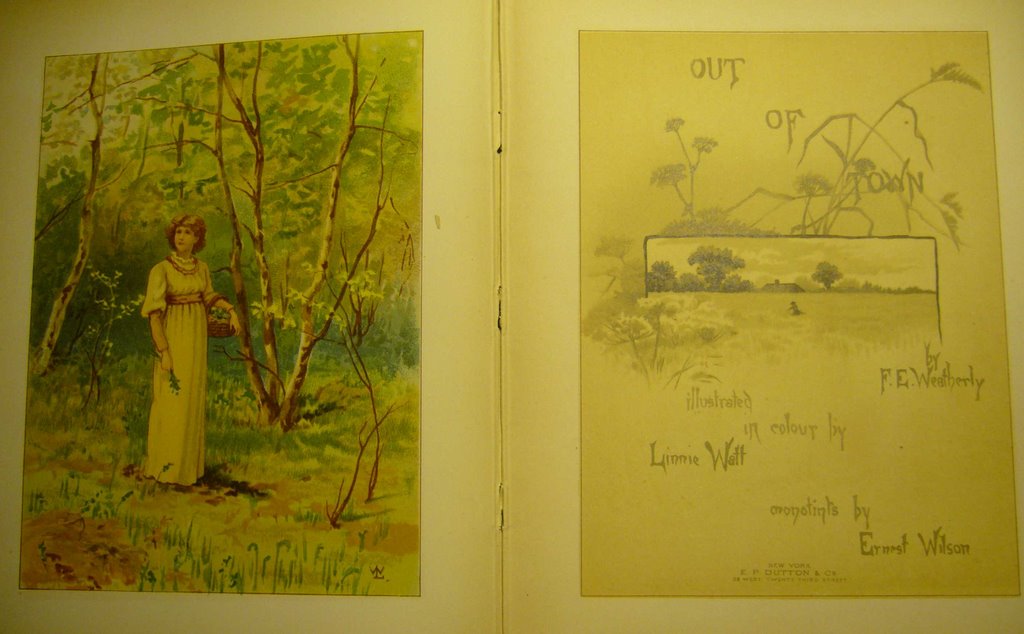
Out of Town

Because people know I'm a book cataloger and a bibliophile, I'm occasionally given old books by friends and relatives. Books acquired for little or nothing, which the donor doesn't quite know what to do with, but thinks might have some value.

"Hmm, maybe Cicily would want this decrepit but kind of interesting old book."

That's how I came upon this copy of Out of Town by F. E. Weatherly. One of my cousins picked it up at the Goodwill and passed it on to me. "It's falling apart," she said, "but the pictures are nice, and maybe you could cut it up and frame them."

Her place is tiny, and she shares it with one of those guys who's really talented but not at all ambitious...one of those guys who'd rather be fishing or smoking weed than working. Every square inch of the place is covered with his aquariums and his marionettes, or has a cat draped over it. I, on the other hand, live with my two minimalist sons in a cavernous Victorian. Loads of 10-foot-high walls on which to hang framed prints from picture books.

Of course, I checked the value of the book when I got it home, and sure enough, it 's worth some bucks. The cheapest copy for sale on the net is $90, and they go up to almost $200. None seems to have the poor binding that my copy has, but that's not really a huge issue with old books, as many people don't realize. It's more important for the interior to be in good condition. Underlining, evidence of library ownership, bookworm damage, water damage and so on are more serious flaws--things that can't be rectified by rebinding.

Frederic Edward Weatherly was an Oxford-trained lawyer, but more famous as a songwriter. He was prolific, with over 3000 songs to his credit. The one everybody's heard of is "Danny Boy." Out of Town is a book of poems, lyrical, as one might imagine. It was published in 1880.

This book has not one but two illustrators. Linnie Watt, a painter who's not totally lost to history, did the lovely chromolithographs. Ernest Wilson did the monotints, which are charmingly integrated with the text. In the poem "Two O'Clock," which begins, "Sing a song of two o'clock, Tadpoles in a pool," the capital "S" is a tadpole. The "Y" which begins "Gentleman John" is a rake. Leaves and branches twine all around the text; a crab hangs by a pincer onto a poem about the seashore.

I haven't got the heart to cut the book to pieces, and of course now I know it's worth more money in one piece. Anyway I've got literally dozens of paintings, photographs, and mirrors yet to be hung--I don't need any more. Out of Town has come to the right place--a creaky old house where everything, including the owner, is vintage, and being old and a little worn out is just the way to be.

Labels: , , , ,

Wednesday, September 06, 2006

Downtown Book Ladies

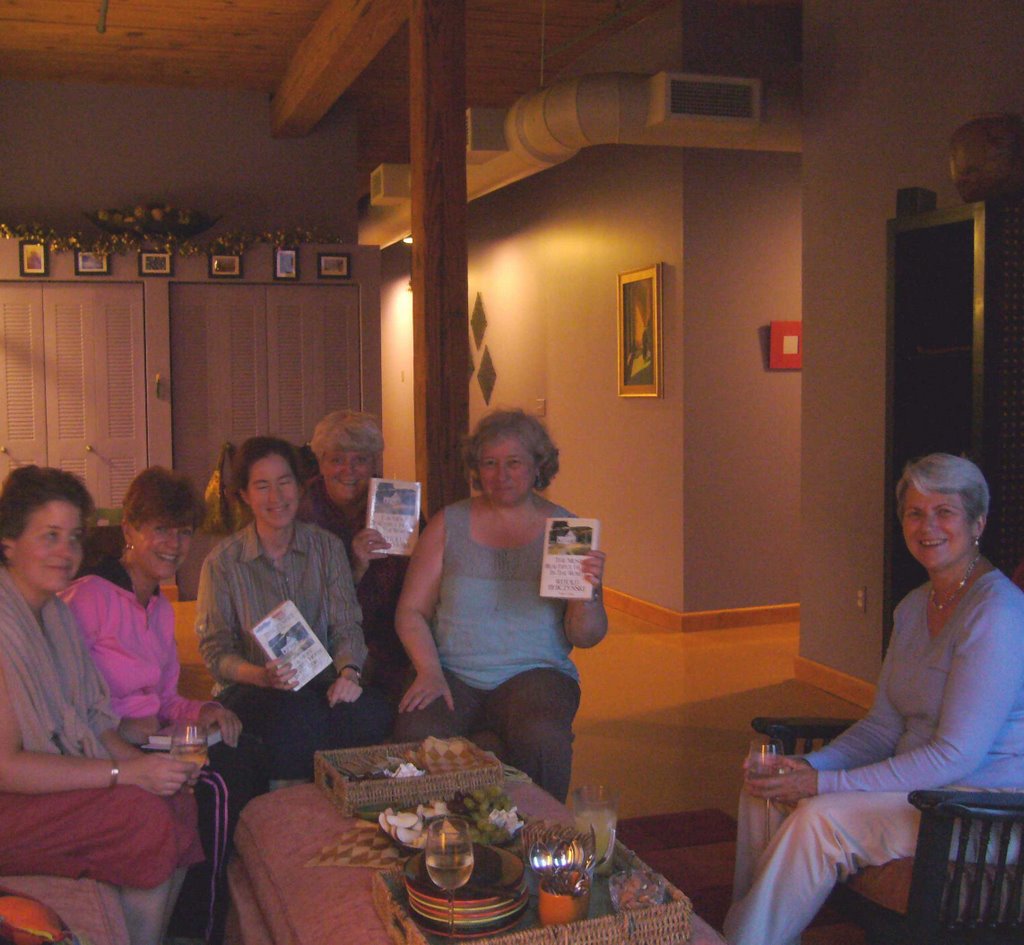
Labor Day is over, everybody's back from the Cape and the Continent, and the fall club-and-social season has resumed. Tonight was the monthly meeting of the Springfield, Massachusetts Downtown Book Ladies Club, on hiatus since last spring.

To be in this club, you have to be female, live downtown or be the sister of someone living downtown, and like to read. Currently, there are seven of us. We meet monthly, and take turns hosting in our homes. In this photo, Anna, Kathy and Maggie are holding up their books to prove that this meeting was not just about white wine, cheese, caperberries, grapes, chocolate decadence, and neighborhood gossip.

We don't have a facilitator, but take some individual responsibility for leading the discussion if it's the book we've chosen. This season, our theme is art and architecture. Everyone has proferred suggestions so far except me. Choosing a book on that theme, under 250 pages and gettable in sufficient quantity through local libraries or bookstores, has so far proved beyond me.

Tonight we discussed Witold Rybczynski's The Most Beautiful House in the World, the charming account by a noted architect of his construction of a boatbuilding shed. Talk about process! He takes years to sketch and dream about it, eventually laying a foundation and finally, finally, actually putting up a building. By the time he's got it up, he's realized that he wants to live in it, and so it becomes a home instead. He never does build the boat.

If that's not a metaphor for my own life, I don't know what is.

Labels: , ,

Friday, June 23, 2006

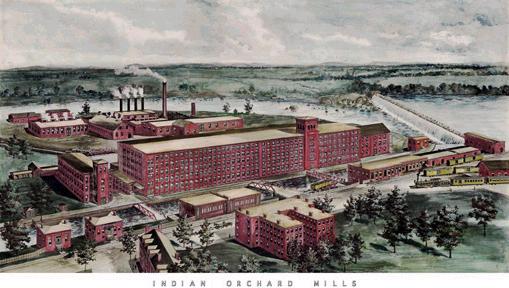
Indian Orchard Mills

This is the home of Dan Wyman Books, source of all the Judaica I catalog. Inside this building, up on the fourth floor, in the back, is where all the books live when they're not visiting the Emory House. I've got perhaps a thousand scattered all over my house; Dan's got tens of thousands shelved in here.

The Mills a century ago was the largest employer in Indian Orchard. A canal diverted water from the Chicopee River through penstocks and past turbines to power the machinery in the mills. With the railroad passing in front of the complex, the river behind, and Main Street only a block away, the Indian Orchard Mills was a hub of activity.

The Indian Orchard Manufacturing Company, owner of the mills, was responsible for much of the infrastructure at the time, donating land for schools, libraries and parks. These mills, other mills located on the same river but closer to Ludlow, and the Chapman Valve Company were the main employers of Indian Orchard in the nineteenth century. They attracted many immigrants to the town in the 1890's and in the early 1900's. Irish, Poles, and French Canadians made up the bulk of this immigrant population.

The Mills eventually languished as manufacturing in the Northeast declined. Today, however, the Mills is once again a pretty vibrant place. Up on the fourth floor with Dan are a piano restorer, a jeweler, and a pocketbook maker, among others. Below us are furniture builders, screen printers, die cutters...name your trade; we probably have it. Next door is a moving company; behind us are artists' lofts. Spring and fall the artists hold an opening, with wine, cheese, a little music combo--very laid-back and cool.

Dan has trouble finding helpers willing to work in the warehouse, bookkeepers particularly. One recent new hire who was visualizing, I guess, a chatty office complete with water cooler, lasted two days. She said the place creeped her out. I like it, though. I make a pot of coffee and listen to blues from one tenant's radio mingled with Brenton Evans testing his pianos with Chopin and Dvorak. Above me, someone is hammering; below me, someone else is drilling. It's the sound of people being useful and productive. What's not to like?

Labels: , , , , ,

Thursday, April 20, 2006

Word of the Day:Eudæmonology

The subject of Arthur Schopenhauer's Essays is, in his words, the wisdom of life. This he defines as the art of ordering our lives so as to obtain the greatest possible amount of pleasure and success. The theory of this art he calls eudæmonology. Eudæmonology, he says, teaches us how to lead a happy existence.

I'm all for that, so I find myself reading the essays of Schopenhauer with great interest. Unfortunately, my knowledge of German is limited to words and phrases useful in the cataloging of books, so I'm reduced to reading him in translation. Worse, I have one of those early-twentieth-century editions that doesn't even bother to record the name of the translator. But that's not enough to dissuade me.

Schopenhauer begins with the Aristotelian division of the blessings of life into three categories: what a man is, what a man has, and how a man is viewed by others. The latter two he promptly dispenses with as being minor and mutable. If a man is by nature cheerful, he feels, he will make the best of what little he has; whereas, if he is by nature melancholy or a "dull blockhead," he will never be happy no matter how much he possesses or how famous he becomes.

I personally could be happy watching a caterpillar cross the road for three hours. Maybe that makes me a "dull blockhead"...but I prefer to think that I have a rich inner life, an extremely sensitive nature, and the ability to wring the last drop of sweetness from life. A veritable "A" student of eudæmonology, although until just this week I never knew it.

Labels: ,