
A Luminous Halo

"Life is not a series of gig lamps symmetrically arranged; life is a luminous halo, a semi-transparent envelope surrounding us from the beginning of consciousness to the end." --Virginia Woolf

My Photo
Name:
Location: Springfield, Massachusetts, United States

Smith ’69, Purdue ’75. Anarchist; agnostic. Writer. Steward of the Pascal Emory house, an 1871 Second-Empire Victorian; of Sylvie, a 1974 Mercedes-Benz 450SL; and of Taz, a purebred Cockador who sets the standard for her breed. Happy enough for the present in Massachusetts, but always looking East.

Monday, December 03, 2007

The Treasure House of Books

Yesterday was the 150th anniversary of the Springfield Library Association, but not of the present library building. Back in 1857, the library was located in City Hall, and was funded by private subscription. Not until 1871--the same year that my own Emory House was constructed--was a separate structure built on the present location. The population of the city grew so rapidly in the ensuing decades that by 1912 a new, much larger building had replaced it.

This new building was designed by Edward Lippincott Tilton and funded in part by a $200,000 gift from Andrew Carnegie. Tilton designed over a hundred libraries, many of them Carnegie commissions. His design for the Springfield Central Library--one of the larger ones with which he is credited--was a turning point in his career.

Tilton was a pioneer in the Open Plan system, in which the most-used books are located on open shelves on the main and upper floors, and the rest in stacks on the lower levels. He embraced the Beaux-Arts ideals of homage to a variety of historical styles coupled with modern innovations such as steel-frame construction. The Springfield Library, and many to follow, was classically-inspired: of white marble and granite, symmetrical and harmonious, chock-full of friezes, Corinthian columns, niches, busts of Minerva, and of course the magnificent rotunda with its glass dome.

With William Boring, Tilton designed the Ellis Island Immigrant Station. In our area, Tilton also designed the Memorial Square Library in Springfield, the West Springfield Library, the Smith College Library, and, with Alfred Morton Githens, the Springfield Museum of Fine Arts and the Springfield Museum of Natural History. The latter two buildings, along with the George Walter Vincent Smith Art Museum, the Connecticut Valley Historical Museum, and this library, form a lovely quadrangle which is one of the chief treasures of our city.

I've been frequenting this library for nearly fifty years, roughly half of its existence. The one constant in my motley, nomadic, sometimes-tumultuous life has been books. I don't think most people realize how much freedom public libraries provide to us with their unlimited access to information. For this we have to thank, among many others, Andrew Carnegie and Edward Lippincott Tilton.

Labels: , ,

Sunday, December 03, 2006

La Casa Hispana

One of the nicknames for Springfield, Massachusetts, dating from the Victorian era, is "the City of Homes." Springfield in the late nineteenth century had an uncommon number of single-family residences. And an uncommon number of those residences were beautiful and interesting.

Many of these homes, notably in the McKnight district, Forest Park, and my own Armoury-Quadrangle district, remain in distinct 19th-century neighborhoods. Many others (James Whistler's, for cripe's sake!) have been razed for projects such as Interstate 91 or the strip malls and medical buildings of the New North. Still others remain, isolated from other buildings of their era, standing with folorn dignity amidst parking lots, vinyl-sided raised ranches, and Butler Buildings.

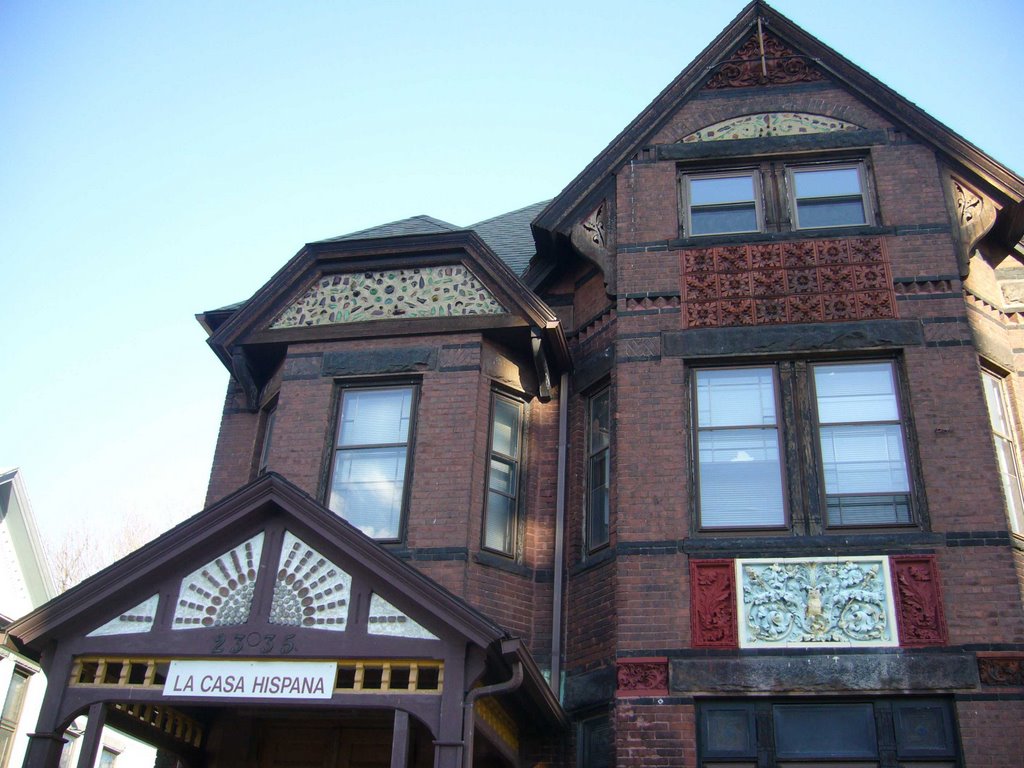
One of the latter is the Casa Hispana, located on Main Street in the North End of Springfield, across the street from the McDonald's. It's headquarters of the Spanish-American Union, established in 1968 when a good part of the North End was razed for the interstate and for professional buildings, displacing many Puerto Ricans. The Casa Hispana houses several social service agencies dedicated to improving the lives of Puerto Rican citizens.

It's a funky building that has long fascinated me. One of these days I'm going to research the history of the structure. It looks to be about the age of my own house.

La Casa Hispana is red brick, with the contrasting bands of black found on some of Mattoon Street's rowhouses. It's got quite a bit of terra cotta decoration, similar to that found on the chimney of the house across the street from me. But from there, it pretty much goes off in its own fantastical direction.

Bricks on the side of the house are set in checkerboard and diamond patterns. Gables and porches are supported by carved wooden brackets. Over each window and door is a fanciful pediment. No two are alike. Mostly they're mosaics of shells and stones. My favorites are what look to be broken bottles set in mortar.

The exterior of my own home, the Pascal Emory House, needs a bit of carpentry. One gutter has to be replaced, one or two brackets need repair, and a half-dozen slate tiles are chipped. Nothing major at all--just the kinds of things you get done when you have the house painted. And the house could use a paint job. There are enough brackets, cornices, moldings, and trims to support five or six colors, if I want to go the Painted Lady route.

There's really no place to put a bottle-glass mosaic, however. It's just not that kind of house. More's the pity. Loking at the Casa Hispana, and at my growing bottle collection, it's one of the many things I fantasize about.

Labels: ,

Saturday, October 07, 2006

Dream House

Here's a house in Brooklyn I wouldn't mind living in. Down by the pier, close to the Brooklyn Waterfront Artists Coalition space. Right across the street from the Fairway Market. Lots of light; plenty of personality. Just enough space for the owner, her car, and maybe a small dog.

Labels: , , ,

Wednesday, September 20, 2006

Ugly Modern Building

I consider myself a preservationist, but that doesn't mean I'm against the new. I'm for saving the best of the past, but of course if we never get rid of anything, we'll soon be drowning in our old stuff, with no raw materials left to create anything fresh.

And it would seem that the human race, having consciousness and memory and language, would learn from the past, and create ever-more-splendid artifacts as it progresses. One has only to look at the contemporary urban landscape, however, to see that that's somehow not the way it all shakes out.

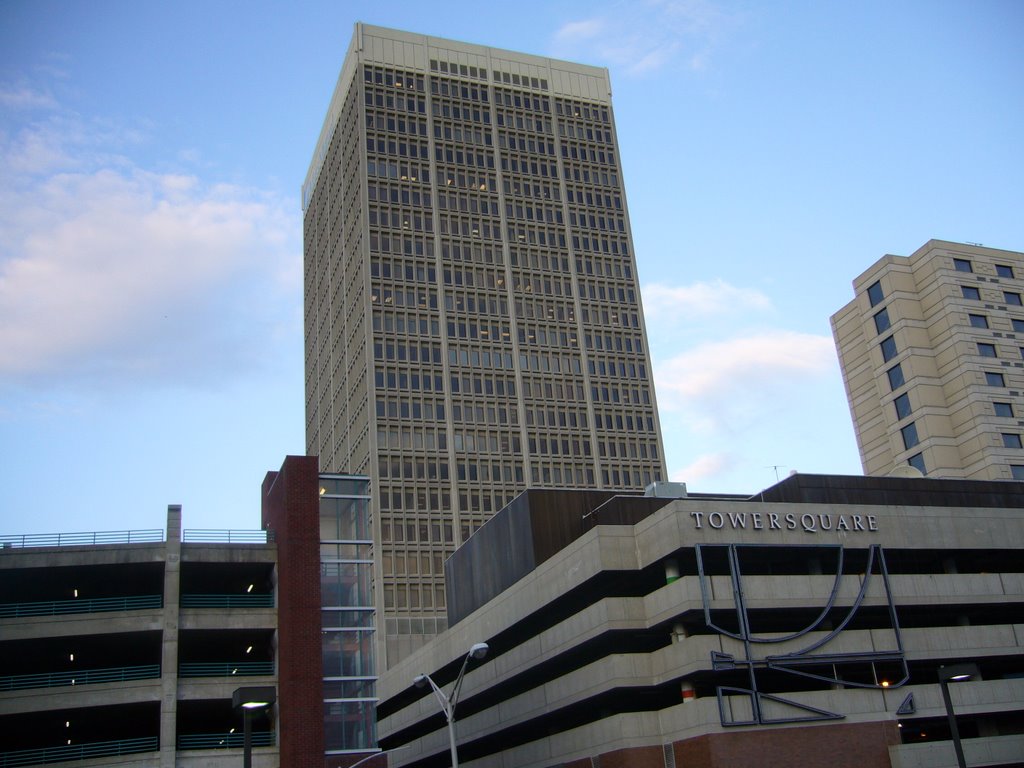
Here's an example of a really ugly modern building in downtown Springfield. Charlie Ryan tore down a lot of lovely structures in the Sixties, when he was mayor the first time around, in order to make room for these graceless concrete bunkers. The original developers were going under, and so local big rich company MassMutual took it over. They have some of their offices in the tallish structure.

If you're interested, the whole sorry story is outlined on deadmalls.com. Which might give you an hint as to what a big success it ended up being to knock down brick, granite, and brownstone, and replace it with concrete.

Labels: ,

Wednesday, September 06, 2006

Downtown Book Ladies

Labor Day is over, everybody's back from the Cape and the Continent, and the fall club-and-social season has resumed. Tonight was the monthly meeting of the Springfield, Massachusetts Downtown Book Ladies Club, on hiatus since last spring.

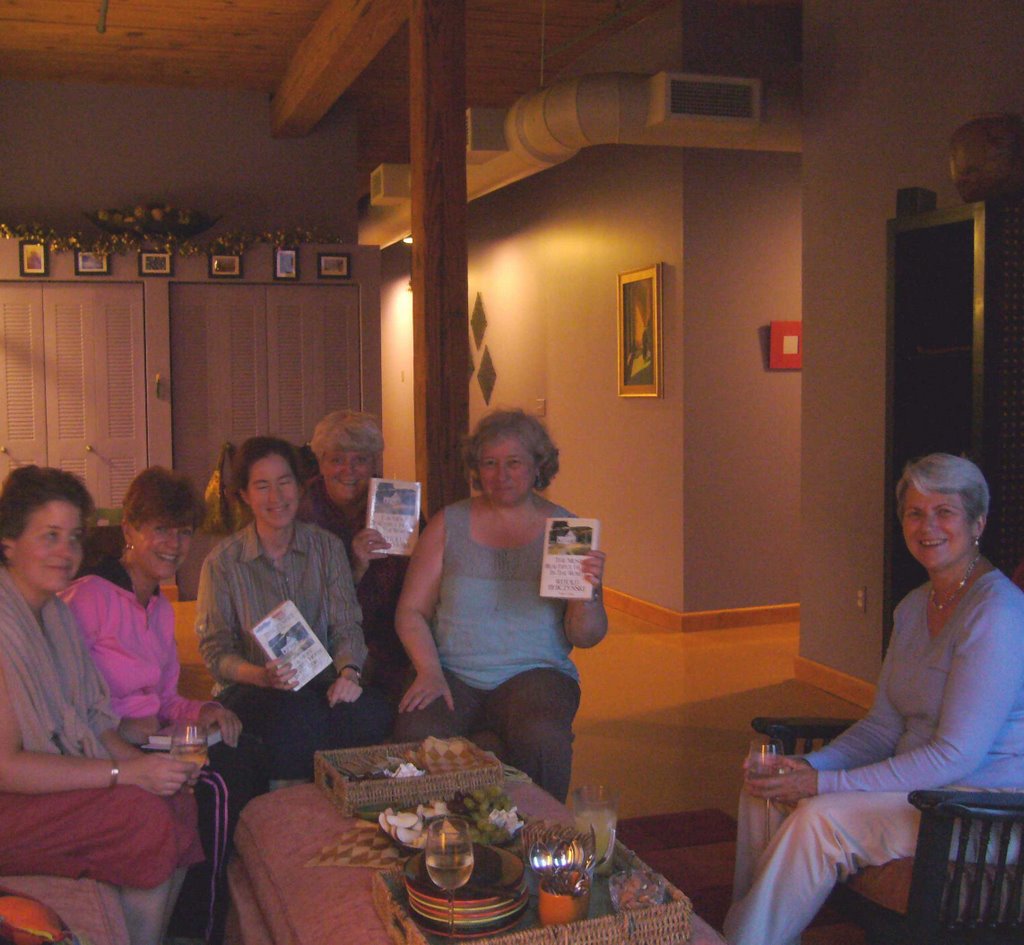
To be in this club, you have to be female, live downtown or be the sister of someone living downtown, and like to read. Currently, there are seven of us. We meet monthly, and take turns hosting in our homes. In this photo, Anna, Kathy and Maggie are holding up their books to prove that this meeting was not just about white wine, cheese, caperberries, grapes, chocolate decadence, and neighborhood gossip.

We don't have a facilitator, but take some individual responsibility for leading the discussion if it's the book we've chosen. This season, our theme is art and architecture. Everyone has proferred suggestions so far except me. Choosing a book on that theme, under 250 pages and gettable in sufficient quantity through local libraries or bookstores, has so far proved beyond me.

Tonight we discussed Witold Rybczynski's The Most Beautiful House in the World, the charming account by a noted architect of his construction of a boatbuilding shed. Talk about process! He takes years to sketch and dream about it, eventually laying a foundation and finally, finally, actually putting up a building. By the time he's got it up, he's realized that he wants to live in it, and so it becomes a home instead. He never does build the boat.

If that's not a metaphor for my own life, I don't know what is.

Labels: , ,

Monday, August 14, 2006

Tapis de Fleurs


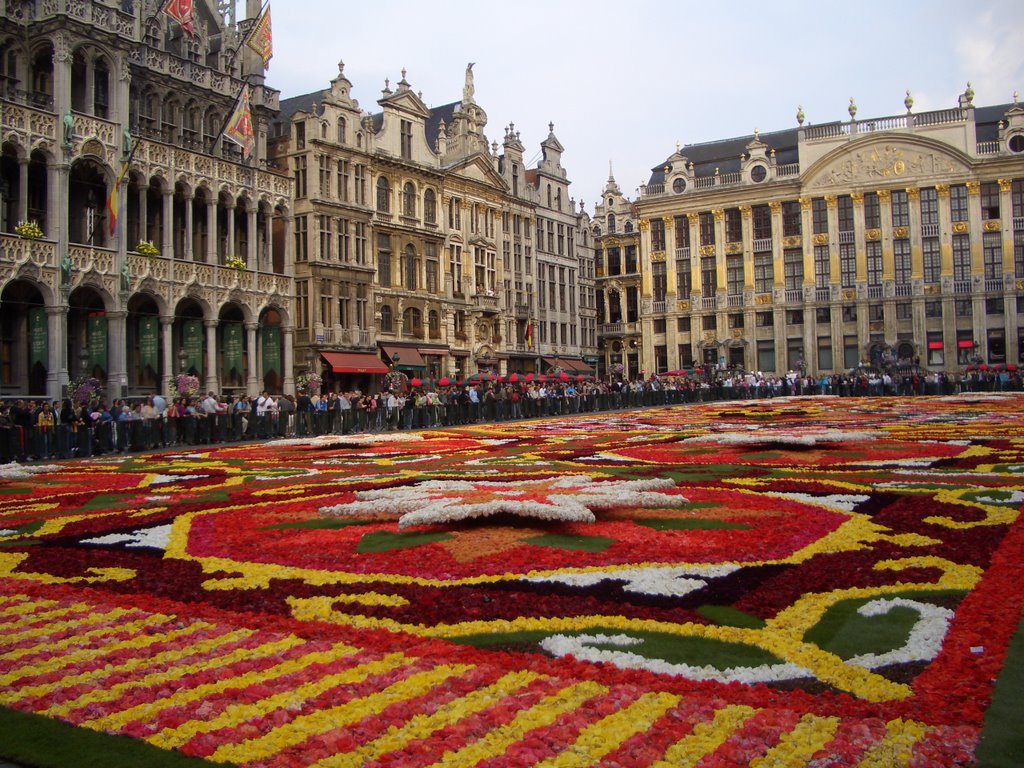
A beautiful weekend in Springfield, Massachusetts--but an even more beautiful one in Brussels, Belgium. This is the weekend that the carpet of flowers is installed in the Grand Place, the heart of the city and arguably the most beautiful square in Europe, even without the flowers. This event takes place every other year in August.

Ever since my mother and one of my cousins lived in Belgium many years ago, I've wanted to see this installation for myself. Although I've been to Brussels more than once, I've never hit it during flower-carpet time. Oh, well.

The carpets consist of close to three-quarters of a million fresh begonias on a base of sod. Every year, the design is different, and is often chosen to symbolize some appropriate event. The 2002 carpet, for example, commemorated the 500th anniversary of Christopher Columbus's discovery of America, with a mariner's compass worked into the central motif. 1994 celebrated the 50th anniversary of the Liberation of Brussels, with the arms of the city and the regimental badges of the British in the design. 1990 was the Year of Mozart.

The tradition of the biannual carpet dates back to the 1970's. The landscape architect Etienne Stautemans originated the idea, having experimented with carpets of various sizes throughout Belgium and in many other countries as well. His intent was to popularize the begonia, a flower native to the West Indies, but cultivated extensively in the Ghent region of Belgium, and much beloved by Belgians. At 60,000,000 begonias per year, Belgium is the world's largest producer of the flowers.

The early installations stuck pretty much to typical carpet patterns, but variety and technology crept in. The 2000 tapis de fleurs looked like a Belgian lace runner on a table. In 2004, the begonias fashioned an art nouveau stained glass window (Brussels is the home of art nouveau). 2002 recreated the gardens of Versailles, complete with pointy cypresses and real water fountains. This year, the tapis is a kaleidoscope--the medallions in the medieval-inspired design actually revolve.

A small army of workers fashioned the entire carpet on Friday. After Tuesday, it'll be gone. The ephemeral nature of the work, of course, makes it all the lovelier. Flowers have long symbolized the transitoriness of human beauty. As Herrick, To the Virgins, to Make Much of Time:

"Gather ye Rose-buds while ye may,
Old Time is still a flying:
And this same flower that smiles to day,
To morrow will be dying."

Labels: , , ,

Sunday, July 30, 2006

Good Bones

Springfield is really a very nice city, although it sometimes seems that most residents, as well as the powers that be in town, don't realize it. I'm really tired of listening to Mayor Ryan say that nobody could be enticed to invest in this city until we get our financial house in order. (So let's bring in a control board from an even more corrupt and mismanaged city, Boston, to fix things.)

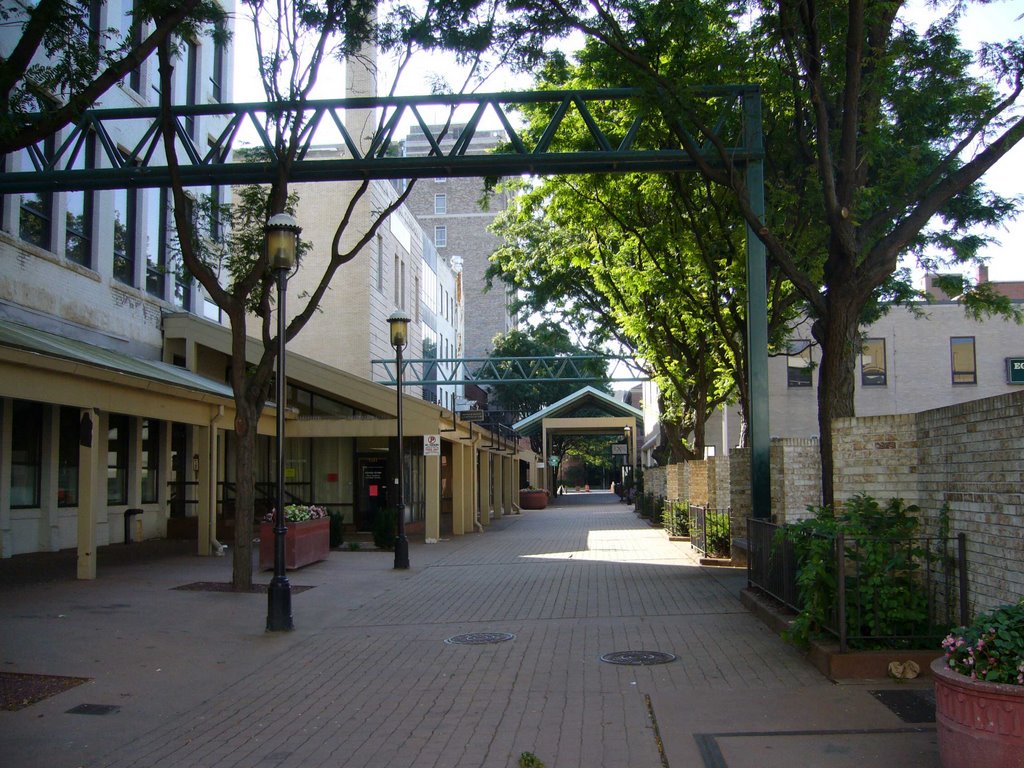
Glenn Edwards, president of GELW Mass II LLC, isn't waiting around for Springfield to market itself. Recognizing the city's "good bones," he purchased four downtown buildings in March, and a fifth this month. The first transaction netted him a strip of retail space on Main Street known collectively as Marketplace, and the more recent transaction secured the adjoining four-story Johnson's Bookstore building, giving him a whole block in the center of the city, with a pedestrian walkway behind.

Mr. Edwards is planning several hundred thousand dollars' worth of renovations. Let's hope he has common sense and some sensitivity to the beauty and history of the buildings, unlike Mr. Ryan, whose legacy to the city is concrete.

Labels: ,

Monday, July 24, 2006

The Atomium

Paris has its Tour Eiffel; Sydney its Opera House; St. Louis its Gateway Arch; Tehran its Azadi Square. Modernistic edifices with distinctive shapes that instantly identify them. Beautiful to some, plug-ugly to others...but unforgettable to all.

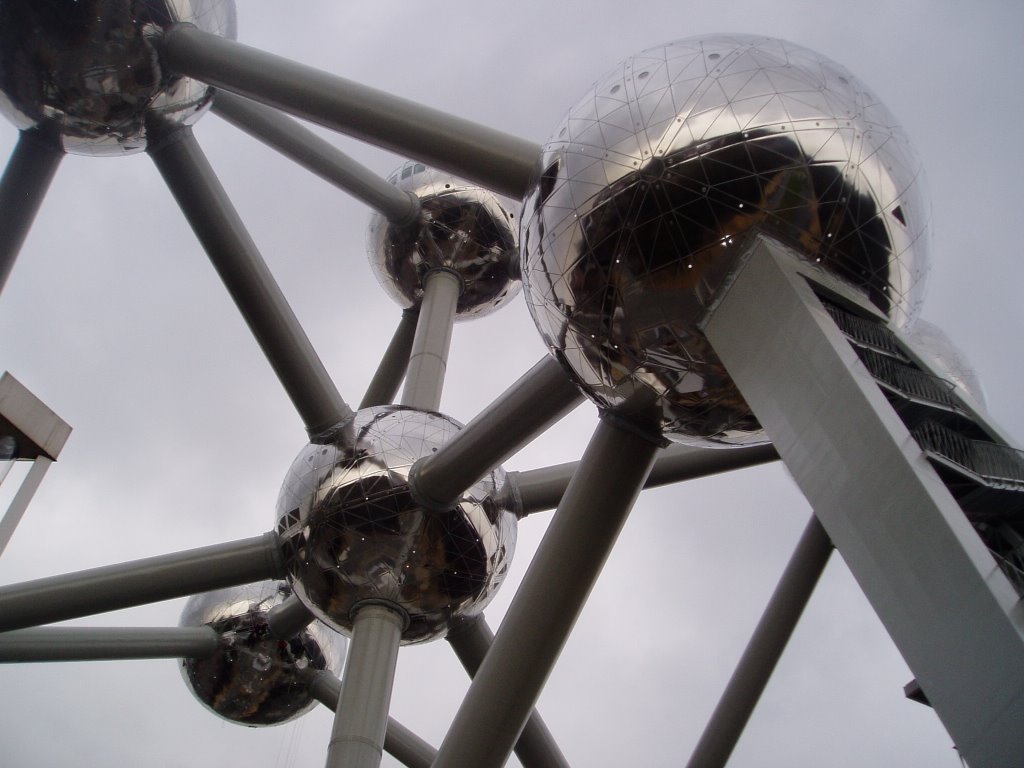
Brussels has the Atomium, a weird building built in the shape of an iron molecule. It was constructed in 1958 by the Belgian André Waterkeyn for the Brussels Universal Exposition, and, like the Tour Eiffel, was never pulled down. Symbol of post-war optimism about the peaceful uses of science and technology to enhance people's lives, the Atomium was erected on the site of the 1935 World's Fair, itself built adjacent to existing royal estates and parks. Altogether there are 200 hectares of woods, parterres, roads and buildings.

The Atomium was getting rather shabby, but has just been renovated. Its 1958 decor is retro-cool. The exterior sparkles and gleams. Inside, every surface has been redone. In the lobby, multicolored Marshmallow sofas--the current remakes of George Nelson's 1956 design for Herman Miller--line the exterior walls. Glass cases display purchasable, albeit pricey, miniatures of 1950's designs, including teeny marshmallow sofas.

The arms of the molecule are stairways, painted fiesta red and turquoise. The atoms are rooms. The top atom is an upscale restaurant, with cuisine by Alexandre Masson: "traditional regional specialities, which, presented in a new way, will give the public the pleasure of rediscovering them." The middle atom is the Polka Dot Bar, at which light refreshments are served. It's got a couple of snazzy old-school refrigerators in it. I want the red one!

Some of the other atoms have exhibits. (Particularly interesting is an exhibit of photographs by Marie-Françoise Plissart, taken throughout the renovation process.) Still under construction last time I was there were two atoms-ful of children's space, complete with unusual podlike units for sleeping. I can't wait to see that section finished, complete with a dozen or so kids nesting in the pods.

The Atomium is has now been swallowed up by the Bruparck, a "leisure park" which also boasts resturants, movie theaters, a water park, a doubledecker carousel, and, last but by no means least, Mini-Europe, "a whistlestop tour around Europe." Over 300 scale models of European monuments done "in quite unequalled craftsmanship." Interactive, too--you can knock over the Berlin Wall and make Mount Vesuvius erupt! Mini-Europe actually looks like just a very large mini-golf course. Endearingly tacky, but, hey. That's Belgium for you.

Labels: , ,

Friday, June 23, 2006

Indian Orchard Mills

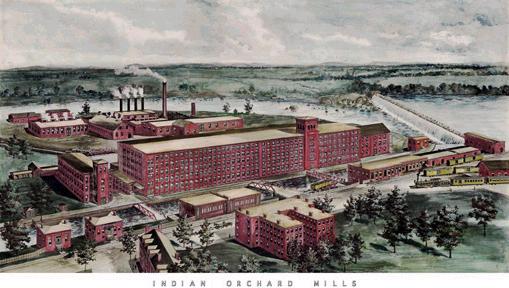
This is the home of Dan Wyman Books, source of all the Judaica I catalog. Inside this building, up on the fourth floor, in the back, is where all the books live when they're not visiting the Emory House. I've got perhaps a thousand scattered all over my house; Dan's got tens of thousands shelved in here.

The Mills a century ago was the largest employer in Indian Orchard. A canal diverted water from the Chicopee River through penstocks and past turbines to power the machinery in the mills. With the railroad passing in front of the complex, the river behind, and Main Street only a block away, the Indian Orchard Mills was a hub of activity.

The Indian Orchard Manufacturing Company, owner of the mills, was responsible for much of the infrastructure at the time, donating land for schools, libraries and parks. These mills, other mills located on the same river but closer to Ludlow, and the Chapman Valve Company were the main employers of Indian Orchard in the nineteenth century. They attracted many immigrants to the town in the 1890's and in the early 1900's. Irish, Poles, and French Canadians made up the bulk of this immigrant population.

The Mills eventually languished as manufacturing in the Northeast declined. Today, however, the Mills is once again a pretty vibrant place. Up on the fourth floor with Dan are a piano restorer, a jeweler, and a pocketbook maker, among others. Below us are furniture builders, screen printers, die cutters...name your trade; we probably have it. Next door is a moving company; behind us are artists' lofts. Spring and fall the artists hold an opening, with wine, cheese, a little music combo--very laid-back and cool.

Dan has trouble finding helpers willing to work in the warehouse, bookkeepers particularly. One recent new hire who was visualizing, I guess, a chatty office complete with water cooler, lasted two days. She said the place creeped her out. I like it, though. I make a pot of coffee and listen to blues from one tenant's radio mingled with Brenton Evans testing his pianos with Chopin and Dvorak. Above me, someone is hammering; below me, someone else is drilling. It's the sound of people being useful and productive. What's not to like?

Labels: , , , , ,