
A Luminous Halo

"Life is not a series of gig lamps symmetrically arranged; life is a luminous halo, a semi-transparent envelope surrounding us from the beginning of consciousness to the end." --Virginia Woolf

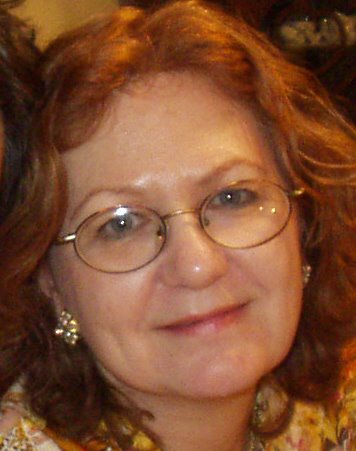
My Photo
Name:
Location: Springfield, Massachusetts, United States

Smith ’69, Purdue ’75. Anarchist; agnostic. Writer. Steward of the Pascal Emory house, an 1871 Second-Empire Victorian; of Sylvie, a 1974 Mercedes-Benz 450SL; and of Taz, a purebred Cockador who sets the standard for her breed. Happy enough for the present in Massachusetts, but always looking East.

Thursday, September 24, 2015

Funny Little Fruit Crackers

Recently I'm eating my way through Cara Brotman and Markus Rothkranz's Love on a Plate: The Gourmet UnCookbook. Yesterday I made fruit crackers, an odd snack if you're not used to raw food. I soaked golden flaxseeds (also called linseeds) with an equal amount of orange juice for a couple of hours, added a bit of maple syrup and some chopped-up pineapple and dried cranberries and spread it on two big trays, then dehydrated the whole business for a couple of hours. At that point I could flip it over and pop it back in the oven for two more hours to dry the other side.

If I had dried it out a bit more, it probably would've been crispy, but I was impatient, so I ended up with a slightly flexible product, almost like a thick fruit leather. I broke it into pieces and I've been nibbling at it ever since.

Golden flaxseeds are identical, nutritionally, to the brown ones, but a bit prettier I guess. Flaxseeds are the most widely available botanical source of omega-3 fatty acids, as well as the richest dietary source of lignans, a type of phytoestrogen. They have been called "nature's hormone replacement therapy." I eat plenty of flaxseeds and can testify that menopause, for me, consisted of two brief hot flashes. No sweats, mood swings, sleep disruption, depression, pain, or any of that. No prescription pills, no worries. I attribute my easy ride to high intake of flax and soy.

Flaxseeds are hard little mothers, so I was surprised that soaking them resulted in a gooey bowl of glop. You're usually advised, for most nutritional benefit, to eat them raw, grinding them just before use. Flaxseed oil seems like it would be handy, but it goes rancid very fast, at which point it's worse than nothing at all. Already-ground seeds pose the same danger. Whole flaxseeds pass through your system undigested, unless you chew them thoroughly. And that's what I've been doing. It would seem impossible to gain weight on this snack (which becomes strangely addictive) because it takes a really long time to chew and swallow! And that's all beneficial fiber you're chewing and chewing, so you get remarkably full after a few little pieces.

p.s. If I make these again, I will add more fruit (as recommended in the book, actually). The recipe calls for dried blueberries and fresh raspberries as well. I just used what I happened to have.

p.p.s. For some reason, the dog is wild about these. She is following me around and begging a lot.

Labels: , , , , ,

Thursday, September 17, 2015

What I Had for Lunch Today: Love on a Plate

I usually have a salad for lunch, and I don't vary the salad much. Romaine always, maybe a little tomato, red pepper or celery, a simple dressing of olive oil, lemon juice, salt and pepper. On top, a sprinkle of chopped nuts, fried tofu, chickpeas or some such. I'm happy to report I'm out of my salad rut with the arrival of this interesting new book, Love on a Plate.

Love on a Plate is an "uncookbook"--all the food is raw. That means no ingredient is ever processed at over 118 degrees Fahrenheit. A blender--preferably a powerful VitaMix--and a food dehydrator are frequently called into service. However, nothing more than a cutting board, a sharp knife, and that old Hamilton Beach blender you got for a wedding present in 1986 will get you pretty far along if you're not quite ready to commit to the raw vegan lifestyle full-time.

 The authors, Cara Brotman and Markus Rothkranz, look like they've sprung fully-dressed from somewhere on Rodeo Drive: tanned, blond, healthy, white and gold outfits glittering in the Southern California sun. Cara is a longtime vegan raw foodie, chef and restaurateur. Markus is a movie special effects guy turned health guru. Together they make living a healthy life simple, attractive and fun.

ALL of the food in this book is extremely easy to prepare. Some of the ingredients need a few hours in the dehydrator, but not counting that drying-out time, a recipe might take three minutes to whip up. Today I made a cheese, date pineapple salad with kale, and it was pretty yummy. I love kale, but I never use it raw in salad. I stuck to the recipe, though, mixing it with cut-up pineapple, dates, scallions, cashews and the non-dairy almond cheese. The dressing is olive oil, cider vinegar, balsamic vinegar, salt, pepper and nutritional yeast (that's the pale yellow powder with the cheesy flavor, not the stuff you use for baking). Again, I'm not a big fan of vinegar, balsamic or otherwise, but I stuck to the recipe. And it was great! All the flavors and textures mixed together perfectly: sweet, sour, salty...creamy, chewy, crunchy: perfection. I even licked the plate.

Labels: , , , , , , , ,

Saturday, April 19, 2014

What I Had for Lunch Today: Dandelion Omelet

This omelet is nothing but a few shallots and a handful of dandelion leaves, chopped and sautéed, salt, pepper, and one egg. I had it with Tuscan pane toast, slathered with boysenberry jam, a few organic strawberries with sugar and a splash of triple sec, and Café Bustelo with molasses and cream. A real taste of spring.

Labels: , ,

Saturday, March 22, 2014

Liquor for Lunch

One of the best things about working from home is, you can drink on the job. Not that I drink all that much, but when I make a pasta dish for lunch and want to have a glass of wine with it, I don't have to think twice. It's perfectly legal. I remember when I was working at Intel, some poor guy had a couple of beers on his lunch break and ended up in a world of trouble, suspended I think. Of course, every box of wafers we handled had a street value of four million dollars, and the equipment was worth much more than that, so probably it was a good rule. But it's not my rule any more.

I don't even like pasta much, so when I do cook it, I always add a lot of other stuff to it. This was a dribs-and-drabs meal anyway...some forgotten tortellini in the freezer and a bit of leftover marinara from last week's pizza. I turned it into vodka sauce with olive oil, shallots, artichoke hearts, rosemary, heavy cream and of course the vodka. I jazzed up some overripe kiwis, persimmon, and raspberries with a splash of Chambord, and ate both dishes with some Merlot. And there you have it...liquor for lunch.

Labels: , ,

Wednesday, March 19, 2014

What I Had for Lunch Today: Braised Cabbage and Pierogi

Braising is a cooking method I like very much, right after stir-frying. It's a combination of frying and boiling...what you do when stir-frying alone would burn the food before it would cook it through. You just begin by frying your cabbage or whatever, then add a bit of water and cover the pan till the food is tender. Sometimes I reverse the process: moist-cook the whatever, then add oil as the water evaporates to make the food crispy.

These were the outer leaves of a head of cabbage, sort of tough to be handled with oil alone. Slivered and braised, with plenty of garlic, they were delicious. And those are some of the homemade pierogi I had frozen at Christmastime. A nod to both my Irish and Polish heritage.

Labels: , , , ,

Friday, March 14, 2014

What I Had for Lunch Today: Parmesan Soup


Remember when bones were free, or practically so? You asked the butcher for them when you wanted to make soup, or give a treat to your dog. Suet was the same: a waste product that bird lovers knew to ask about. The butcher went in the back and reappeared with a hunk, which you could wrap up in a piece of chicken wire and hang up in the back yard to attract chickadees and woodpeckers. Then the markets got wise, and now the fat and the bones cost as much as some of the meats.

Same thing with cheese rinds. Stores used to toss them; if you knew someone in the back, they might save them for you. Most people wouldn't even know what to do with them in any case. But then word got out about using them for gourmet soup, and now they're six to ten dollars a pound.

Here's some of that gourmet soup. What it lacks in beauty, it makes up for in taste. Half a pound of Parmigiano Reggiano rinds, an onion, a few cloves of garlic, a handful of Italian parsley, salt and pepper simmered for an hour with a quart and a half of water makes the broth. It's supposed to be strained, and the solids discarded. As if! I just chopped up the cheese into chewy nuggets and kept going. I added cooked cannellini and some ribbons of kale, cooked it a bit longer till the kale was tender, then drizzled olive oil over it to serve.

This is divine with a couple of slices of toasted sperlonga. Although spring is technically less than a week away, it's still ridiculously cold here, with views of snowbanks from all the windows. A pot of this will be long gone before anyone at the Emory House wants warm-weather fare.

Labels: , , , ,

Thursday, February 27, 2014

Julia Child Declassified

If Julia Child had not been over six feet tall, she would've enlisted in the WACs or the WAVES during World War II, instead of the Office of Strategic Services. She wouldn't have gone to Kandy, Ceylon with the OSS, she wouldn't have met Paul Child there, she wouldn't have married him after the war, she wouldn't have been introduced to gourmet French cuisine by Paul, she wouldn't have challenged herself to learn to cook it for him, she wouldn't have formed L'école des trois gourmands, written all those books, done all those TV shows...and cuisine in the United States would not be what it is today. As the Bobs sing in "Julia's Too Tall," their a capella tribute to the famous chef: "She's too tall to be a spy,/But not too tall to bake a pie."

Julia (as a fellow alumna, I feel we can be on a first-name basis) graduated from Smith College in 1934 with a major in history and minors in music and French. In 1935 she became assistant to the advertising manager at W. & J. Sloane, 5th Avenue, NYC., at a salary of $20/week. Returning home to California after a year and a half due to her mother's illness, she became a fashion columnist (!!!!) for a San Francisco publication, earning $25/column. When the magazine went bankrupt, she went back to work for W. & J. Sloane, this time in Beverly Hills, as advertising manager. In 1942, with World War II in full swing, she began working as a civilian in the Office of War Information, and from there transferred to the OSS. She stayed until the office was disbanded in 1946, got married to Paul Child, and the rest is culinary history.

Julia's 130-page OSS file was declassified in 2008, and it makes interesting reading. Not the insufferably dry parts the government wrote, but the parts she contributed, such as her résumé and job applications. Her cheerful forthrightness and dry humor shine through even in these mundane documents.

On her earliest filed résumé, she doesn't flinch when asked her reason for leaving her last pre-government job. "Fired, and I don't wonder. One needs a much more detailed knowledge of business, buying, markets, and more experience in advertising than I had for so much responsibility. But I learned a great deal, and did pretty well in establishing the mechanics of the office and the business personnel." On her OSS job application, she's a bit more diplomatic. Reason for leaving (same job)? "Resigned." "Store in state of upheaval owing to change of management. Disagreement with management." "(Think it was partly store politics. I was put in over the heads of several who wanted the job, and I was put in by the New York office. Basic disagreements with new manager about method & approach. Think also they needed a more mature person for the job.)"

At the job before the OSS, with the U.S. Information Center in Washington D.C., she "typed over 10,000  little white cards and put in for a transfer to the OSS." Elsewhere she sums up that job: "Verifying names & complete breakdown of titles of government executives and other persons of importance, typing them on small index cards, copying cards several times. Am supposed to get a promotion to typing bigger cards, but nothing has happened." I wish I could go back in time 70 years and reassure Julia that she has much, much bigger cards in her future.

When the OSS disbanded, Julia McWilliams was granted an Emblem of Meritorious Civilian Service. In it she was praised for her resourcefulness, industry, sound judgement, drive, and inherent cheerfulness. "Morale in her section could not have been higher." Sounds to me like Julia was just being Julia. Giving 200% to everything you do, from typing little white cards to making television history, if you live to be 90 or so, can get you all the way from Smith to the Smithsonian.

Labels: , , ,

Monday, February 24, 2014

Rose Mochi

So, I've been fooling around with some Asian recipes recently, and yesterday I made mochi. I started with the recipe from tworedbowls.com, which I found at Food52, a cooking site I trust. I would've made green tea-flavored mochi if I had had plain green tea powder on hand, but I didn't, so I opted for rose-flavored instead. I was thinking of masghati, a Persian sweet also made of starch, but flavored with rosewater, cardamom, saffron and pistachio nuts.

I mixed up a cup of mochiko (sweet rice flour), a cup of sugar, a half-teaspoon of baking powder, a cup of water, and half a can of coconut milk. That was the recipe as given. To color the mochi, I grated a little fresh beet into the water and then strained it out. To flavor it, I added a teaspoon of rosewater. I poured the whole business into a Pyrex greased with coconut oil, covered it with foil, and baked it for an hour at 275 degrees. After it was out of the oven and cool, I cut it into squares and tossed them in a bit of cornstarch so they wouldn't stick together.

When the mochi went into the oven, it looked like Pepto-Bismol and smelled overpoweringly of rosewater. I was worried that I had overdone both the flavoring and the coloring. But when I uncovered the baked mochi, all the pink was gone; instead, it was exactly the color and texture of raw boneless chicken breast. The flavor, on the other hand, was perfect. I don't like using artificial food colorings, so I guess I'm stuck with a vegan treat that tastes amazing but looks like raw meat.

Labels: , ,

Tuesday, January 07, 2014

What I Had for Lunch Today: Adzuki Sprout and Rice Noodle Stir-fry

Adzuki beans are one of the most nutritious foods you can eat. Besides being high in protein (17grams per cup), they contain B vitamins, iron, magnesium, zinc, copper, manganese and folic acid. Sprouted, of course, they are even more nutritious and easier to digest.

In China, the adzuki bean is commonly referred to as 紅豆 ("red bean"). Cooked with sugar and mashed, it becomes red bean paste, from which so many Chinese sweets are made: mooncakes, sweet soups, ice cream, et cetera, et cetera. Actually, red beans are popular all over Asia. In Japan, there's even an adzuki-flavored Pepsi.

For my lunch, I stir-fried them with onion, garlic, sweet orange pepper, peapods, ginger, and boiled rice stick noodles. I seasoned the dish with toasted sesame oil, tamari, lemon zest, and a sichuan condiment made up of hot peppers, sesame seeds, peanuts and a few spices in soybean oil. Lan Chi Szechuan Sauce with Garlic would have been my first choice for a condiment, if I had had any. It seems to be disappearing from the shelves of Asian markets. But that's another blog entry.

Labels: , ,

Sunday, January 27, 2013

Kissel


Kissel is a Russian fruit dish which I make with cranberries and serve as a dessert. When red currants or other red summer fruits are used (raspberries, strawberries, rhubarb, and so forth), it's the Danish rødgrød med fløde, served daily in some Danish households. Cranberries are oh-so-good for you, full of vitamins and antioxidants, but too sour to eat out of hand. If you're going to eat sugar, it might as well be in this healthful fashion.

The recipe I use comes from the now out-of-print Horizon Cookbook, published in 1969. I own the two-volume hardcover edition in a slipcase. If the house were burning down, it's quite possibly the first thing I would grab. The first volume is an "Illustrated History of Eating and Drinking Through the Ages"--erudite and engaging. The second volume is recipes from all over the world, plus menus from elaborate dinner parties of the past. Every recipe I've tried is absolutely authentic. All the great classics are in here. I use it regularly for pesto, guacamole, pastry cream, baklava, scones...and this.

Basic recipe: three cups of cranberries and four cups of water, boiled about ten minutes and then pureed through a food mill or sieve. A cup (or to taste) of sugar added and the whole business brought back to the boil. A quarter cup of cornstarch or potato starch mixed with a little water stirred in carefully so no lumps form, and cooked a minute or so till it thickens.

I turn the kissel out into a pretty glass bowl for serving. It's supposed to be eaten chilled, but I like it the minute it comes off the stove. Top with heavy cream or a non-dairy alternative.

Labels: ,

Saturday, March 10, 2012

Itty Bitty Coffee Eclairs

I've had coffee éclairs on the brain for some time, and today I finally made them. I was taking them to a party, so I made them really small. Eclairs can be messy if they're more than one bite--not a good thing when you're standing on an expensive carpet, wearing nice clothes and trying to balance your snacks and glass of wine in a crowded roomful of possibly-tipsy people. For the party, I alternated them on a tray with equally-tiny cream puffs. That's a demitasse cup in the photo, if you want to get an idea of the scale.

The shells for éclairs and cream puffs are made from exactly the same dough, a simple pâte à choux (that's French for "cabbage paste"). The recipe is simple and foolproof: bring a cup of water and six tablespoons of butter to a boil in a heavy saucepan, then take off the heat, add a cup of flour and stir it up. Next add four egg yolks, one at a time, stirring well after each addition. Stir the whole thing a minute or two more over a medium flame to evaporate excess moisture. Then you just pipe the pâte onto a buttered baking sheet in whatever shapes you want. My éclairs were less than two inches long, and my cream puffs were an inch or so in diameter. (They do grow a bit in the oven.) To get that size, I used a pastry bag with no tip on it. You could also make cream puffs by just dropping blobs of dough onto the sheets with a spoon. This recipe made 75 little baked shells.

I baked these at 425 degrees until they were light brown and crisp--about 20 minutes perhaps. Then I filled them with pastry cream (made from scratch the proper way, with a double boiler and four more eggs, but you could use vanilla pudding if you didn't want to bother or were afraid; do it wrong and you end up with runny sauce or else scrambled eggs).

I frosted the cream puffs with icing made from melted Ghiradelli dark chocolate thinned with a bit of cream, and the éclairs with an icing made from confectioner's sugar, cream, and a bit of espresso powder. If you want them totally authentic and a little smoother and prettier, make your own fondant instead. It's a lot more work and tastes exactly the same.

Labels: , ,

Wednesday, March 09, 2011

Bread Pudding, Bailey's, and Books

Tonight was the March meeting of the Downtown Book Ladies. We take turns hosting, and always are treated to a nice spread. This time, Sue Rice made a divine bread pudding with whiskey caramel sauce. I had met this luscious dessert once before, at our recent progressive dinner party. Because I was in polite company, I didn't eat the entire pan that night, but I easily could've. It was even better this time, because I had it with Bailey's Caramel Irish Cream. Talk about gilding the lily.

As for the books, we've given up our organized method of choosing a theme and then finding a season's worth of appropriate titles. We are all voracious readers, but have trouble somehow getting around to the book on the list. So this year we're just each reporting on whatever we've read to the rest of the group. We go home full of wine and food, reading recommendations, copies of books others are finished with, and of course a month's worth of gossip and travel news. Best book club ever!

Labels: ,

Monday, March 07, 2011

Movie Food: Spicy Indian Puffed Rice

Mondays have become movie nights at my house. Alma and I go to Chinese class from 3:15 till 6:15, she drives me home, I invite her in, and we make Chinese food for supper. Then we eat it while watching a Chinese movie with English subtitles. Occasionally we are able to pick out a word, which excites us.

Today we shook things up a bit by adding a snack which wasn't Chinese. I had some puffed rice laying around, left by my former housemate. I don't like cold cereal, so I decided to jazz it up. I fried some peanuts in the wok, added several cloves of crushed garlic, cumin, turmeric, garam masala, and chili powder, plus the rice, with enough oil so it wouldn't burn or stick. Better than popcorn!

Labels: ,

Sunday, March 06, 2011

What I Had for Lunch Today: Ravioli and Artichokes


What do you do with leftover ravioli? Fry it! This spinach ravioli was good the first time, but even better left over. I trimmed and steamed some baby artichokes (which are not really "babies," by the way--just a miniature variety), and tossed them in extra-virgin olive oil as well. Oh, and some red peppers and onions. Then I steam-fried a couple of handfuls of fresh spinach, finished it with a cream sauce, and poured the whole thing over. Kosher salt, fresh-ground black pepper, and voilà: les restes des raviolis.

Labels: ,

Saturday, March 05, 2011

What I Had for Lunch Today: Fake Chicken and Pepita Salad


Ever since I learned how to read, I have been reading with my meals if I can get away with it. I'm not so rude that I'll read at the table if other people are present (although eating and reading with other people who are also eating and reading would be the best of all possible worlds). Since the advent of the internet, I sometimes eat at my desk while reading something online, especially if it's chilly. (I've got a comfy setup: heater under the desk, dog sleeping on my feet, fuzzy blanket, etc.) But on a sunny day, nothing beats the kitchen table, a plate of food, a cup of tea, and a book.
At the moment I'm working through a review copy of Abbe Diaz's PX This, a hilarious insider's view of the tony Manhattan restaurant and fashion industry. While I read about celebrity chef Jean-Georges Vongerichten's tuna spring rolls and his tantruming staff, I'm eating a salad of romaine dressed with extra-virgin olive oil, fresh lemon juice, sea salt and freshly ground black pepper. To this I added grape tomatoes, sautéed strips of fake chicken, and pepitas. It's healthful, delicious and cheap, plus I don't have to sit by the toilets or be snubbed by a bitchy maitre d'.

Labels:

Why Do Grapefruits Have 13 Sections?


Ever since I can remember, I have been counting the segments of grapefruits whenever I section them. The count is virtually always thirteen. It seems I'm the only one I know who's ever bothered to observe this, let alone explain why it is.

We tend to think of organisms in nature as symmetrical, and many are. Cells multiply by dividing in two, then dividing and dividing again. But there are other mathematical sequences which are common in nature. The Fibonacci sequence is one.

The sequence is created by adding each number to the number before it to create the next number. 0 + 1 = 1, 1 + 1 = 2, 1 + 2 = 3, 2 + 3 = 5, 3 + 5 = 8, 5 + 8 = 13, 8 + 13 = 21, 13 + 21 = 34, and so on. So the sequence goes 0, 1, 1, 2, 3, 5, 8, 13, 21, 34, 55, 89, 144....

If you start studying arrangements of petals, seed heads, leaves, etc., you will see the Fibonacci numbers popping up again and again. Buttercups have 5 petals; delphiniums, 8, cineraria, 13, black-eyed Susans, 21, plantain, 34, Michaelmas daisies, 55 or 89. (Some are not exact for every flower, but always average out to the Fibonacci number.) Apples have 5 carpels, or seed compartments.

Many plants exhibit spiral formations in the arrangement of their petals, leaves and seeds. Think of pineapples and pinecones, cauliflower and cacti. The numbers of spirals in each direction are usually Fibonacci numbers. Looking at a plant from above, you can see that these arrangements allow seeds to be packed optimally into seedheads, leaves to overlap so that lower ones get the maximum amount of light, and so forth.

The Fibonacci sequence is closely related to phi (the golden mean or golden ratio; 1 plus the square root of 5 divided by 2). Both were objects of study of Leonardo of Pisa, a.k.a. Fibonacci, generally considered the greatest European mathematician of the Middle Ages. Studying phi and the Fibonacci sequence takes you from Nautilus shells and pentagrams to Euclid, Kepler, Bartok, Debussy and Turing. To fibonomials, Lucas numbers, the Golden string....I'm going to stop now. But Dr. Ron Knotts at the University of Surrey has some very interesting pages on the subject here: http://www.maths.surrey.ac.uk/hosted-sites/R.Knott/Fibonacci/fib.html If you're like me, you'll find yourself doing the puzzles, following the links, and listening to Fibonacci-sequence-inspired musical compositions on youtube. It's a mind-suck, in a good way.

Labels: ,

Thursday, March 03, 2011

What I Had for Lunch Today: Kukuye Khorma


A Persian kuku is basically an omelet. Khorma are dates. One thing about Persian food is, it's always gorgeous; the presentation is so over-the-top that when a Persian cook brings a dish to a potluck, nobody touches it. It's too beautiful to cut into. So please don't judge by this photo. The dates are supposed to be left whole and arranged symmetrically in the pan after sautéeing them just enough to soften; the eggs are carefully poured over. Then the whole business is painstakingly garnished. My version is more like scrambled eggs with blackened date pieces (with all that sugar, they burn easily, and the phone rang). But hey, I only make this dish when I'm in a hurry, never for company.
I ate my kuku with green beans tossed in my iron spider in butter and chili powder just till the chili is fragrant. Not an authentic Persian side dish! But I had all the flavors: sweet, salty, hot, and it was delicious.

Labels: ,

Wednesday, March 02, 2011

What I Had for Lunch Today: Capellini with Vodka Sauce, Asparagus and Pistachio Nuts


When I have a little bit of marinara sauce left over, I usually doctor it up. This time I turned it into vodka sauce by simmering it with some butter, heavy cream, and vodka. Hey, I'm half Polish. Those are the three ingredients a Polack would want if she were stranded on a desert island.

I poured the vodka sauce over cooked capellini and added braised asparagus and some pistachio nuts. Capellini à ma façon!

Labels: ,

Saturday, February 12, 2011

The Perfect Caffè Latte


I celebrate most mornings with coffee--in a glass because the preparation is very beautiful. I don't call it a "latte" for short because--as has been pointed out to me by persons in the know--that will get you a cup of plain milk in Italy. I don't call it a "cappuccino" because I add the coffee to the milk and not vice versa, and I don't want the purists coming down on me for that, either.

I warm the milk and foam it up using a little battery-operated wand bought at Ikea for $1.99. I make the coffee in a one-cup Bialetti moka pot which I've had for years. (Moka is like espresso except made with less steam and pressure.) I use Café Bustelo ($2.50 for a brick at the bodega around the corner). If money were no object, I'd use Illy.

I pour the coffee into the milk....the slower you pour it, the less it mixes. I sprinkle cinnamon and sugar plus a bit of raw sugar on top. If you're careful, you can mix it up--after admiring the design--without spoiling the nice sugar crust.

Labels: ,

Monday, December 13, 2010

What I Had for Lunch Today: Sichuan Red-cooked Eggplant


About thirty years ago, there was a Chinese restaurant in Enfield named simply "Szechwan Restaurant." The waiters were crabby and made nasty comments when you brought a kid along; the chef didn't cater to American tastes. No generic menus here. Sea cucumber salad, weird jellied things, stir-frys presented in deep-fried noodle nests, and when they said hot, they meant HOT! They had an amazing sauce they would bring out to make the food even hotter, too. I had never tasted Sichuan food (well, it was "Szechwan" then; Pinyan romanization took over in 1982), and I was in heaven.
Then the restaurant burned down. I inquired in vain for the chef--he must have gone somewhere--but never could figure out where. I visited Chinese restaurant kitchens, trying to buy similar sauces from them (no go!). Finally I hunted down a cookbook in the library--Mrs. Chiang's Szechwan Cookbook--which had recipes for all of my favorites from that vanished place. I wrote them down and I have been making them ever since. This eggplant dish is one of those recipes.
It's eggplant cut into pieces "the size of your thumb" and stir-fried, then removed. In the same pan, you make a sauce by stir-frying a few cloves of garlic, chopped, then adding a tablespoon of hot bean sauce (I use Lan Chi Chili Paste with Garlic), half a cup of broth, and a couple of tablespooons of soy sauce. Put the eggplant back in and cook till all the sauce is absorbed. Garnish with Chiangking vinegar, toasted sesame oil, and some of those chives growing next to your driveway. I serve mine with brown rice.

Labels: , ,